Mercy – Film Review
Published January 24, 2026

Movie Details

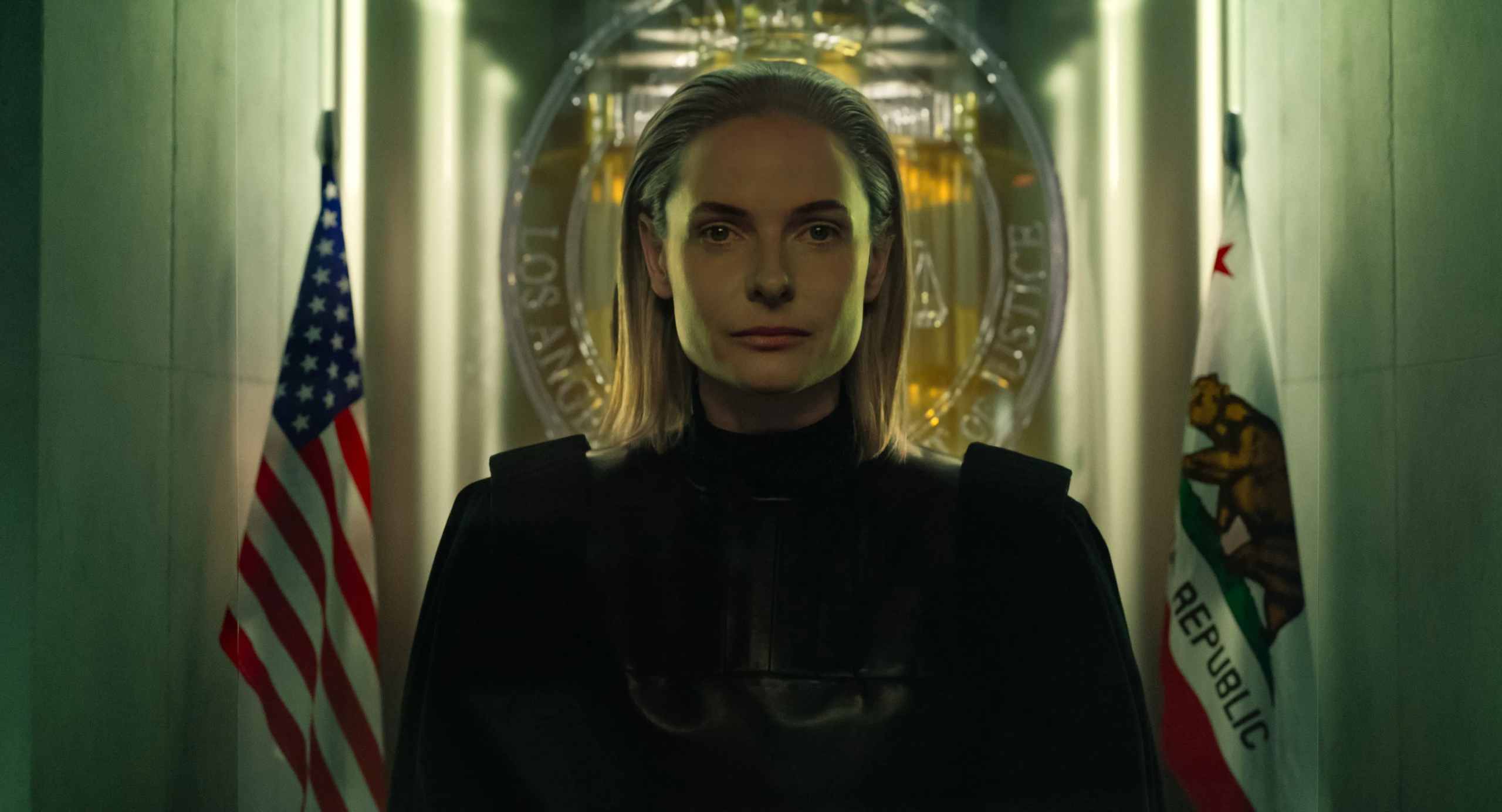
Timur Bekmambetov has built a career on high-concept spectacle, kinetic visuals, and stories that feel engineered for maximum velocity. Mercy certainly fits that mold. Set in a futuristic Los Angeles where an AI-powered judicial system determines guilt in real time, the film promises a tense fusion of science fiction, action thriller, and courtroom drama. With a cast led by Chris Pratt and Rebecca Ferguson, plus a timely premise about algorithmic justice, the ingredients for sharp, nerve-wracking entertainment are all there. Yet despite flashes of style and a concept that should feel terrifyingly plausible, Mercy buckles under clunky writing, shallow characters, and a narrative that mistakes noise for suspense.
The hook is undeniably strong. The “Mercy Court” system uses an AI judge to analyze evidence, behavior, and probability to determine whether a defendant is guilty of a violent crime. They have 90 minutes to reduce their statistical likelihood of guilt below a specific threshold—or face immediate execution. It’s a chilling blend of predictive policing and automated justice, tapping directly into modern anxieties about surveillance, data misuse, and institutional overreach. The film wants to ask whether humanity should ever outsource morality to machines. Unfortunately, it rarely slows down long enough to explore that question with any depth.
Chris Pratt plays LAPD detective Chris Raven, a man accused of murdering his wife. Pratt leans into the “damaged but determined” mode he’s used before, trading wisecracks for gritted teeth and haunted stares. He’s convincing enough in the physical demands of the role—running, fighting, shouting at screens—but the emotional beats feel rushed. The script tells us Chris is a flawed husband, struggling with alcoholism and guilt over past failures, but these traits come across more like bullet points than lived-in trauma. We’re informed of his pain rather than made to feel it.
Rebecca Ferguson voices and embodies Judge Maddox, the AI overseeing the trial. She brings a cool, controlled presence that gives the system an eerie calm. Her performance is one of the film’s few highlights, walking a careful line between neutral program and something almost human. There are moments where Maddox’s tone suggests curiosity or hesitation, hinting at fascinating territory about machine learning and moral evolution. But those threads are largely drowned out by the movie’s relentless pace and its need to stage the next crisis.
Visually, Mercy is pure Bekmambetov: glowing interfaces, sleek holographic displays, and a near-future city that looks like today’s world run through a high-end tech filter. The courtroom setup—part interrogation chamber, part data hub—is stylish and claustrophobic, giving the early scenes a focused intensity. Surveillance footage, archived memories, and digital reconstructions swirl around Chris as he tries to prove his innocence. For a while, this creates a compelling “detective story inside a trial” structure, where information becomes both weapon and lifeline.
The problem is that the film treats every revelation like an explosion. Instead of building a careful chain of logic, it lurches from twist to twist, constantly raising the stakes in ways that feel more desperate than organic. Probability percentages flash onscreen like a video game health bar, but the mechanics behind those numbers remain vague. The AI’s decision-making process is whatever the plot needs in the moment, which undercuts the tension. If the rules of the system feel flexible, the threat loses its bite.
The action sequences suffer from a similar issue. There are chases, tactical raids, and high-tech confrontations that are staged with energy but little coherence. Bekmambetov’s hyperactive editing style, once novel, now feels like overcompensation. Scenes that should land as shocking or tragic instead blur together into a haze of motion and noise. Rather than escalating the drama, the action often interrupts it, pulling the story away from its most interesting idea—the psychological and ethical nightmare of being judged by code.
The supporting cast is also underserved. Kali Reis brings toughness and physical credibility to Chris’s partner, but the character is written in such broad strokes that she feels more like a plot device than a person. Annabelle Wallis appears in memories and recordings, meant to embody the emotional heart of the story, yet she’s given so little dimension that her absence carries less weight than it should. The family dynamics, which should be the driving force behind Chris’s desperation, are sketched so thinly that they struggle to ground the larger sci-fi spectacle.
Tonally, Mercy never quite figures out what it wants to be. Is it a gritty thriller about a broken man fighting a flawed system? A cautionary sci-fi tale about algorithmic authority? A high-octane action movie with a futuristic gimmick? It gestures at all three, but commits to none. The script piles on personal trauma, systemic corruption, and large-scale danger, yet rarely gives any one element the focus it needs to resonate.
What’s most frustrating is how relevant the central idea feels. An AI determining life-or-death outcomes based on data patterns is not far-fetched anymore. There’s rich dramatic territory in the tension between statistical probability and human complexity—between what can be measured and what can’t. Mercy nods toward these themes but mostly uses them as a flashy backdrop for a conventional conspiracy thriller.
By the time the film barrels toward its climax, it has stacked so many reversals and revelations that emotional clarity is lost. The story becomes about mechanics—who’s where, what’s armed, what’s counting down—rather than meaning. The final stretch aims for catharsis and moral reckoning, but it feels more like narrative exhaustion. Big ideas about justice, trust, and accountability get resolved with the same blunt force as the action scenes.
There’s no denying Mercy looks expensive and moves fast. For viewers seeking surface-level thrills and glossy sci-fi aesthetics, it may provide momentary distraction. But as a story about the future of justice and the limits of technology, it barely scratches the surface. As a character drama, it’s undercooked. As an action thriller, it’s loud but forgettable.
In the end, Mercy is a film that confuses urgency with depth and spectacle with substance. It builds an intriguing courtroom of the future, fills it with talented actors, and then rushes past everything that might have made it matter. The result is a slick, frantic ride that leaves surprisingly little behind once the system powers down.