We Bury the Dead – Film Review
Published January 4, 2026

Movie Details

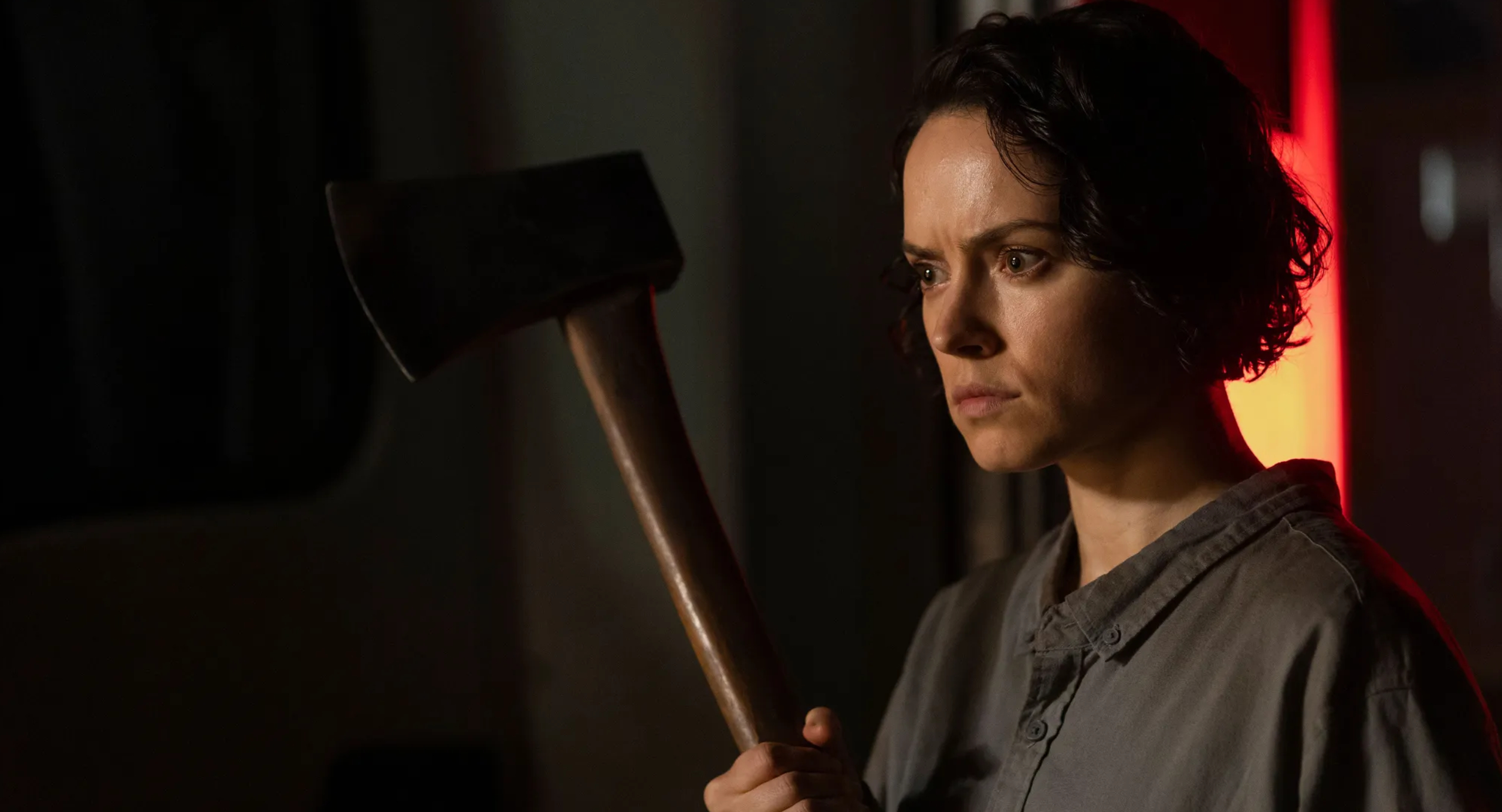
Zak Hilditch’s We Bury the Dead is not a zombie film interested in cheap shocks, body-count spectacle, or rapid-fire action. Instead, it positions itself as a somber survival thriller that leans heavily into emotional devastation, moral compromise, and the quiet horror of a world that has ended not with chaos, but with eerie stillness. Set against the haunting landscapes of Tasmania, the film uses its undead framework to explore grief, denial, and the human instinct to cling to love even after it has been irreversibly lost. While its ambitions are admirable and its central performance compelling, the film ultimately lands as a solid but frustratingly uneven experience.
The premise is immediately striking. An experimental weapon renders the nervous systems of every human and animal on the island inoperable, plunging Tasmania into mass unconsciousness that resembles death. In the aftermath, recovery crews arrive to dispose of bodies, only to discover that some victims awaken violently, transformed into something no longer fully human. This setup allows Hilditch to sidestep many genre clichés. The undead here are not the result of infection or apocalypse-by-plague, but of technological hubris and unintended consequences. It’s a smart choice that gives the story a grounded, unsettling plausibility while reinforcing the film’s bleak tone.
Daisy Ridley stars as Ava Newman, a woman driven by a singular goal: finding her missing husband, who was on a business trip when the weapon detonated. Ridley brings a weary intensity to the role, conveying exhaustion, hope, and suppressed panic in equal measure. Ava is not portrayed as a hardened survivor or reluctant hero. She is fragile, desperate, and often visibly overwhelmed, which makes her journey feel painfully human. Ridley’s performance anchors the film, even when the narrative around her falters or becomes repetitive.
Hilditch structures much of the film as a grim road journey across a depopulated island, and this is where We Bury the Dead is at its strongest. The Tasmanian landscapes are shot with stark beauty, emphasizing emptiness rather than destruction. Roads stretch endlessly through silent towns, abandoned vehicles, and still bodies, creating an atmosphere that feels mournful rather than chaotic. The absence of constant musical cues allows the natural quiet to become oppressive, reinforcing the idea that this world has already ended, and what remains is simply the process of acceptance.
Rather than portraying the undead as mindless monsters, the film takes a more unsettling approach. Their behavior is unpredictable, sometimes violent, sometimes eerily subdued. This ambiguity adds tension, as Ava can never fully trust what she encounters. Hilditch seems less interested in jump scares than in sustained unease, and while this restraint won’t satisfy viewers seeking traditional zombie thrills, it aligns with the film’s meditative tone.
Brenton Thwaites appears as Clay, another volunteer whose motivations are more opaque. Thwaites plays the role with quiet ambiguity, offering moments of warmth that are undercut by an undercurrent of self-preservation. His chemistry with Ridley is intentionally restrained, built more on shared trauma than camaraderie. Clay serves as a reminder that even among the living, trust is fragile when the rules of humanity have collapsed.
The film’s most unsettling stretch involves Mark Coles Smith as Riley, a lone soldier whose presence introduces a different kind of horror altogether. Smith delivers a deeply disturbing performance, embodying a character warped by loss and isolation. This section of the film shifts away from survival thriller into psychological horror, confronting Ava with the dangers posed not just by the undead, but by the living who have lost their moral compass. While Smith is excellent, this portion of the story is also where the film begins to feel tonally unbalanced, lingering so long in discomfort that it threatens to overshadow Ava’s emotional arc.
One of We Bury the Dead’s most distinctive qualities is its focus on grief as an active, almost physical force. Ava’s journey is less about survival than it is about refusing to let go. The film repeatedly asks whether hope is a virtue or a delusion in a world where death has become the default state. Hilditch handles these themes with sensitivity, though sometimes at the expense of narrative momentum. Several scenes feel more symbolic than necessary, reiterating emotional beats the audience has already grasped.
The pacing is another area where the film struggles. Even though it’s just ninety-five minutes, We Bury the Dead often feels longer than it needs to be. Long stretches of travel and reflection, while thematically appropriate, occasionally lack enough variation to maintain tension. The film is at its best when it balances introspection with threat, but it too often tips entirely into the former, risking disengagement.
That said, there are moments of profound originality that elevate the experience. The film includes sequences that reframe what it means to be “undead,” offering haunting, almost poetic imagery that lingers long after the credits roll. These moments suggest a version of the film that could have been truly exceptional had Hilditch trusted restraint across the board.
The final act brings the story toward a quietly emotional conclusion, emphasizing endurance rather than triumph. It avoids bombast or easy catharsis, instead opting for a subdued sense of fragile possibility. While not all narrative threads feel fully resolved, the ending aligns with the film’s commitment to emotional realism, even if it may leave some viewers wanting greater clarity or closure.
We Bury the Dead is a thoughtful zombie survival thriller that prioritizes grief over gore and character over spectacle. Daisy Ridley delivers a strong, grounded performance that carries the film through its uneven pacing and tonal shifts. Zak Hilditch’s direction is confident and thematically rich, but occasionally indulgent, preventing the film from fully realizing its potential. As a genre entry, it is more contemplative than thrilling, more mournful than terrifying.
For viewers willing to meet it on its own terms, We Bury the Dead offers a somber, emotionally resonant take on the undead mythos. For others, its deliberate pace and heavy focus on loss may feel exhausting rather than enlightening. Either way, it stands as an ambitious, flawed, and ultimately worthwhile addition to the zombie genre — a film more concerned with what we carry after the end than with how the end arrives.